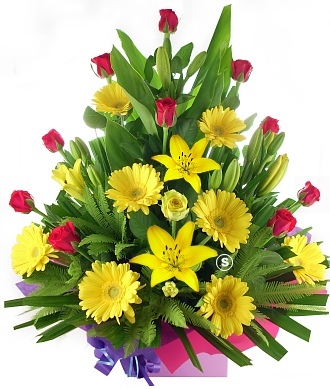
Wednesday, August 22, 2012

Fertilizer Injector Systems Of Floriculture


Fertilizer injector systems are standard equipment in today's greenhouses. There are many types of injectors on the market. Basically, they work the same. A concentrate of water-soluble fertilizer is mixed in a tank. Water-soluble fertilizers dissolve completely in water and stay in solution. The concentrations of the water-soluble fertilizers are also easily adjusted. The fertilizer concentrate is then mixed with the water in exact proportions before irrigating plants. With fertilizer injectors growers can provide exact levels of nutrients.
There are a number of advantages to using fertilizer injectors. The greenhouse plants are provided with constant liquid feeding. This is especially important with soilless media that have a low cation exchange capacity. The plants are fertilized when they are watered thus reducing labor. All the plants of a particular crop receive the same levels of nutrients. This assists in producing a uniform crop. In addition, adjustments to the level of nutrients in solution can be made easily.
Calculating ppm
Nutrients in solution are measured in pans per million or ppm. Growers can refer to tables in reference books or to instructions with their injector system to determine the amount of fertilizer needed to reach a desired ppm. However, growers must also understand how to calculate parts per million (ppm) of fertilizer nutrients.
Slow Release Fertilizers
Slow release fertilizers are self- defined by their name. These products continually discharge a small amount of nutrients over a period of time They are available in two forms. One form consists of a water-soluble fertilizer held within a plastic resin or sulfur coating. The coating is designed to allow a small
amount of fertilizer to be slowly released. They have the appearance of little round beads and are sometimes mistaken as insect eggs by the uninformed. The other type of slow release fertilizer comes in a granular form. This type releases no more than I percent of the fertilizer in a 24-hour period.
The use of slow release fertilizers has declined with the increased use of water-soluble fertilizers through injector systems. Growers have a much greater control with the fertilizer injector systems. However, there are some advantages to the slow release fertilizers. Slow release fertilizers can be safely mixed with the growing medium prior to planting. Slow release fertilizers provide a more constant supply of nutrients than water-soluble fertilizers. This is particularly true when watering is less frequent. Slow release fertilizers work well when capillary mats are used to water plants. Also, slow release fertilizers can be used to extend the shelf life of plants once they leave the greenhouse.
NUTRIENT DEFIENCY
Plant quality and thus, profits, are lost if the plants cannot obtain the essential nutrients from the medium. Even if only one necessary nutrient is missing, the plant can develop deficiency symptoms. For example, nitrogen promotes the growth of green, leafy tissue. If the available nitrogen is low, the plant may take on a yellow appearance. The growth rate slows and the plant often is stunted. This happens even when all the other essential nutrients are available.
If a plant fails to receive the needed nutrients, it will show signs of nutrient deficiency. Nutrient deficiencies most often surface as an unhealthy plant appearance. Symptoms vary with the nutrient that is in short supply. Common symptoms of deficiencies include discoloration of the leaves, death of leaf tissue, and stunted growth. Because of the complex interactions of nutrients in plant processes, deficiency symptoms for different nutrients are often very similar. Laboratory tests, including the analysis of plant tissues, can be used to determine which nutrient is lacking.
SOLUBLE SALTS
contribute to the soluble salt content in the growing medium Soluble salts consist of these dissolved mineral salts. High levels of soluble salts are harmful to plants. Young plants are especially sensitive.
The damage caused by soluble salts is through a process known as reverse osmosis. As the salt concentration builds up in the growing medium, it prevents water molecules from being absorbed by the roots. In severe cases, water is drawn from the root cells into the growing medium. The resulting damage caused by soluble salts is the burning of the roots. Wilting or the death of leaf tissues follows the injury or death of the roots.
Damage from soluble salts can be avoided by preventing a buildup of soluble salts in the growing medium. A good practice is to water the plants until water drains from the container. As the water flows through the growing medium, it carries soluble salts with it. This is known as leaching.

Tuesday, August 21, 2012

The Floriculture Of Asexual Propagation


Asexual propagation is plant reproduction using the vegetative parts of a plant. Leaves, stems, or roots might be used. Unlike sexual propagation, asexual propagation results in offspring that are the genetic duplicates, or clones of the parent plant.
Recombination of genes that would occur in sexual reproduction does not occur. Therefore, plants with outstanding characteristics can be produced without the risk of losing the desired characteristics, such as flower color or leaf variegation. Some plants are difficult to reproduce sexually. They may produce few seeds or the seeds they produce may result in low germination rates. Huge numbers of genetically identical plants (clones) can be produced. Plants can be grown that are free of diseases. Mature plants are obtained more rapidly as compared to seed.
Methods
There are many methods of propagating plants asexually. Some plants are easily propagated in a number of ways. Other plants respond best to a particular method. Cuttings, grafting, layering, separation, division, and tissue culture are types of asexual propagation methods.
Many plant varieties and cultivars are patented, much like an invention is patented. If they are propagated, a royalty is paid to the owner of the patent. Failure to do so is against the law. Some companies specialize in providing rooted cuttings and stock plants to growers. Chrysanthemums are a good example of a floriculture crop propagated by specialists. Most greenhouse growers buy rooted chrysanthemum cuttings and pot them up. The royalties are factored into the cost of the cuttings.
Herbaceous Cutting
One of the most common and simplest methods of asexual propagation is that of cuttings. Cuttings may be made from portions of stems, leaves, or roots. Most greenhouse crops are propagated by herbaceous or soft stem cuttings. Growers often keep stock plants or buy new stock plants each year from which stem cuttings are removed. The apical meristems of stock plants are pinched to encourage branching. Other types of herbaceous cuttings include leaf cuttings, leaf-petiole cuttings, and leaf-bud cuttings.
Once taken, cuttings are given optimal environmental conditions  floriculture to promote the regeneration of the missing plant organ or organs. Environmental conditions critical for successful rooting include proper temperature, high humidity and sufficient light The rooting media must be free of disease organisms. It should also have good water-holding ability and good aeration.
Rooting is a complex physiological process. The time it takes for the cuttings to root depends on many factors. The plant species or variety, the age of the plant, the type and location of the cutting, the absence or presence of leaves, and the nutritional status of the plant influence rooting.
Propagation by stem cuttings is the preferred method for poinsettias, chrysanthemums, zonal geraniums, kalanchoe, carnations, and many foliage plants. The cuttings, in length, are taken in the morning when the tissues are turgid or full of water. A sharp knife or razor is used for the cuts. It is also advisable to disinfect the knife between stock plants to avoid spreading disease. Any flowers on the stem should be removed.
The distal end of the cutting, or the end closest to the root system, is usually dipped in a rooting hormone to hasten the formation of adventitious roots. The cuttings are then placed in rooting cubes or directly into a medium. This practice of placing the cuttings is known as sticking cuttings.
After the cuttings are stuck, they are placed under an intermittent mist system. The mist is applied between dawn and sunset to reduce water loss from transpiration. They are misted regularly until the roots form and can absorb moisture for the plant. The propagation area is often shaded to reduce stress from the sun. Bottom heat is also provided to maintain a medium..
More and more growers use the practice of direct sticking cuttings into the finish container to save labor involved in transplanting. However, the grower must have enough bench space under mist and a means to keep the medium warm. Leaf Cuttings
A relatively small number of plants have the ability to produce plantlets on their leaves. Entire leaves or portions of a leaf are removed from the parent plant for use as leaf cuttings. Plants propagated by this method include African violet Mother-in-law's tongue Cape primrose and Rex begonia.
Propagation of Mother-in-law's tongue, Cape primrose, and Rex begonia involves the placement of a leaf blade or a portion of a leaf blade in a propagation medium. Healthy leaves that have just reached maturity should be used. Those leaves are at a stage when food production and the capacity to produce new plantlets are high.
African violets are easily propagated by leaf-petiole cuttings. The leaf blade and the petiole are taken from the parent plant. Under proper conditions, a cluster of plantlets develop where the petiole was cut. When the plantlets have grown large enough to handle, they are separated and potted in individual containers. A few plants, including the piggyback plant (ToInlea menziesii), kalanchoe, and the strawberry geranium, produce foliar embryos. Through a complex process, cells in small areas of a leaf develop into plantlets. The plantlets can be removed and planted.

The Pew Decorations Of Floriculture


Another unique feature of a wedding is the decoration of pews. Pew decorations are bows, flowers, or floral designs that are attached to the end of the pews in the aisle where the bridal party walks Some pew decorations are more elaborate to denote the family pews. Bows do not have to be placed on every pew. In fact, adding decorations on every other or every third pew can be just as decorative and effective. Some brides may wish to decorate only the family pews.
Bows may be designed with #9 or #40 or a combination of widths and colors to match the wedding colors. The bows should have long streamers. Tulle adds a soft romantic look. The bows should look uniform and should be designed by the same person or two persons with the same style. Attach the bows carefully to the pews with tape or a rubber band. The rubber band (subtle, blending color to the pew) is placed horizontally around the pew end with the bow attached to the rubber band. Flowers may be attached to the bow for a more floral effect. For a larger floral effect, use a floral foam mechanic designed to create pew decorations. Floral pew decorations are usually one-sided with an upright or rounded shape, as well as some trailing or cascading foliage, such as ivy or ferns.
Guest Book
The guest book is a standard feature at every wedding. Sometimes, the table upon which the guest book is placed is too small for any flowers so a bow is the only decoration. If the table is large enough, a basket of flowers or other suitable centerpiece design can be placed on it to attract the guests' attention. The attendant can then ask each guest to sign the register.
RECEPTION FLOWERS
The floral decorations for the reception can be as varied as each bride's personality. The location also dictates many of the floral features. Common reception decorations are centerpieces at the guests' tables, the head table decorations, the cake table decorations, and possibly an entryway feature, such as an arch.
Head Table Decorations

The head table is a place of honor for the bridal party. Head table decorations enhance the setting for the bride and groom. Typical head table decorations are centerpieces often featuring the bride's and bridesmaids' bouquets and floral garlands. Garlands of similax or sprengeri fern can be purchased from the wholesale florist, which is a time-saver for the floral designer. The garlands are draped across the front of the head table. Flowers and ribbons may be hot-glued into the garland for touches of matching wedding colors.
Small bouquets or clusters of flowers are attractive adorning the table and garland. The garlands are securely pinned to the table skirting. Manufactured table clips can be purchased to attach the garland.
Cake Table Decorations
The wedding cake is a focal point at the reception. The cake table decorations should all revolve around the wedding cake to emphasize it, not distract from it. The wedding cake can be enhanced with flowers placed on top and with foliage and loose flowers at the base. Cakes with tiers might have flowers on each tier. The flowers can be designed like corsages or in a floral foam base. Do not place the flowers directly on the cake) place the flowers on a doily or a plastic separator, which can be provided by the baker.
Depending upon the style of the wedding, garland is also appropriate to decorate the cake table. Small flowers can be hot-glued into the garland. Sometimes, the toasting glasses and the cake knife are decorated with a small bow or small floral accent. If a punch bowl is placed on the cake table, the base of the bowl can be decorated with flowers that coordinate with the cake base flowers.

Other Reception Decorations
An entryway arch into the reception might be included in the reception area decorations. Flowers for an arch can be designed as presentation bouquets and attached by tying with ribbon. Hidden water tubes will extend the lasting qualities of the flowers. Flowers may also be added to an arch by inserting them into a moistened floral foam cage or spray bar that is securely attached to the top or sides of the arch.
Potted plants are a nice feature when grouped around a small stage area, near the arch, or an entryway. The containers should be foil or fabric wrapped with bows in appropriate colors.

What Is Floriculture Of Floral Design


The literal definition of floriculture is the "culture of flowers." Floriculture is based on flowering and foliage (leafy) plants. It is an international. Multibillion dollar industry. Floriculture businesses include the production of the floral crops, the distribution of the crops from the grower to the consumer, and the processing of crops before sale. Some common floriculture businesses are florist shops, floral supply companies, and production greenhouses. Floriculture is a major part of a larger industry called ornamental horticulture. Ornamental horticulture is the practice of growing and using plants for decorative purposes. Another major part of the ornamental horticulture includes the nursery/landscape industry.
FLORAL PRODUCTION
Floral production involves the growing of flowering or foliage crops to sale size or maturity. The value of floriculture crop production in the United States has shown steady growth. The total wholesale value of floriculture crops in the United States is nearly $4 billion. The states of California and Florida lead the way in floriculture production. Amazingly, 54 percent of all floriculture production in 1997 involved just five states—California, Florida, Michigan, Texas, and Ohio. Bedding plant production represented 47 percent of the wholesale value of all floriculture crops in 1997.
Floriculture production involves people with an understanding of plants and plant growth. The person in charge of the crop production is called a grower. Large greenhouse operations will employ a number of growers, each of whom may focus on one or more specific crops. Other job titles associated with floriculture production include production supervisor, marketing manager, and greenhouse worker.
Production begins with some form of plant reproduction, whether by seed or by a portion of a plant. Plant reproduction is commonly known as plant propagation. The new or young plants are grown to a size or an age at which they may be sold for further production purposes. Some might be sold directly to the consumers.
Most floriculture crops are produced in some type of greenhouse structure. A greenhouse is a structure enclosed by glass or plastic that allows light transmission for plant growth. Greenhouses give growers the ability to control environmental conditions affecting a crop. Greenhouses allow a high level of light to reach the plants. They can be heated or cooled depending on the needs of the plants. Watering and fertilizer applications are also carefully controlled by the grower. In addition to providing control of specific growing conditions, greenhouses allow plants to be grown throughout the year.
Greenhouse growers often specialize in growing certain crops. The decision to grow certain crops is based on a number of factors. The most important factor determining which crops are produced is profit. Can the crop be sold for a profit? The climate is another very important factor. The greatest concern with climate is the amount of sunlight and the average temperature. One reason the major producers of cut carnations and roses are located in Columbia, South America is because the climate is perfect for growing these crops. Greenhouses are not needed to produce these crops in Columbia.
Nearness to the market influences decisions as to what crops are grown. Cut flowers can be grown far from the marketplace. They are relatively light weight. As a result, the cost of shipping cut flowers by air, even across oceans, is affordable. Potted plants are most often grown locally because of the cost of shipping. Laws also restrict the movement of soil across borders.
Cut flowers—Some floral production operations focus on supplying cut flowers to wholesale florists. That is, they grow flowers, cut them when they reach a certain maturity, and sell them to a wholesaler. Roses, carnations, chrysanthemums, and orchids are a few common cut flowers. Cut foliage or leaves grown for floral design work are also grown and harvested. Leather leaf,
lemonleaf, and huckleberry are common foliage materials used in floral work. Those in the industry often refer to cut foliage as "greens."
Potted flowering plants—A large segment of the floriculture industry is the production of flowering plants in pots. The plants may be propagated by seed or through asexual means, such as
cuttings of plants. The young plants are grown to the flowering stage in a greenhouse structure. The entire plant and the pot are then shipped to market. Some popular potted flowering plants are poinsettias, chrysanthemums, Easter lilies and African violets.

Foliage plants—Some growers produce potted plants to be sold as foliage plants. Foliage plants are grown for their leaves rather than for their flowers. They are also called houseplants. Florida is a large producer of foliage plants, which are shipped throughout the United States. Philodendrons, dieffenbachias,figs, scheffleras, and dracaenas are common foliage plants produced for use in homes and offices.
Bedding plants—Many greenhouse growers produce bedding plants in the spring for outdoor planting. Bedding plants are herbaceous, annual flowers and vegetables. They lack the ability to survive freezing temperatures and therefore, must be planted outdoors after the risk of spring frost. They are usually started by seed and grown in a greenhouse during the late winter and spring. Gardeners transplant the fairly mature plants in the landscape. By producing the plants well before a safe planting date, gardeners are given a longer period during which they can enjoy the plants. Bedding plants include impatiens, petunias, marigolds, tomatoes, and many other plants.

Saturday, August 11, 2012

Keeping Cut Flowers Fresh for Longer


I love having flowers in my home. Whether they are fresh flowers from my garden, beautiful arrangements from a florist or even silk flowers, the splashes of color that they add to a room are absolutely fundamental to my living space. That being said, cut flowers only last so long before they begin to wilt and die. What can I do to preserve their beauty and enjoy them for longer?
Of course, I could go the gardening route and get container plants for my home. But I really prefer the look of cut flowers in a beautiful vase. Also, I don’t really have the green thumb necessary or the time needed to make indoor planter flowers bloom. Silk flowers are an option I have used in the past and they look good, but they don’t offer the true experience of real flowers.
Aspirin:
This has been the most common tip I have heard over the years and, after many trials with this trick, I can tell you that it doesn’t work as advertised. Side by side with the same flowers in plain water, the aspirin seems to do nothing.
Bleach:
Bleach is highly poisonous and while it might stave off any mold or bacteria that might want to attack the stems of your flowers, it will also poison the flowers and cause them to lose their color even though they have shown signs of wilting less.
Sugar:
This one actually showed some benefits. The blossoms opened wider than they should have and kind of exploded outward, but they did indeed look fresher for a little longer. I would suggest changing out the water daily with this method to avoid flies and fermentation.
Flower food:
This is really your best option. The flowers that had been fed with flower food stay brighter for longer and resisted drooping. The difference was notable and substantial.
 If you want to keep that bouquet or flower arrangement looking as good as it can for as long as it can, flower food is really your best bet. If you don’t want to go for a more natural route, a little sugar (about a half teaspoon with every change of the water) can help but, too much can cause explosive and erratic blooming. If you are really afraid of wilting and drooping flowers, silk flowers are probably a better option for you. But, I promise that there is nothing like fresh flowers to brighten up a home.

Wednesday, August 1, 2012

Role of Different Flowers in Our Life


Being a human being we always love to be appreciated and recognized for every deed of our life. They are ever ready to receive priceless and beautiful gifts for every celebration or occasions. A diamond ring will always excite your ladylove, but will fall in for you all over again when you present this diamond ring along with a bunch of fresh and beautiful flowers. Flowers in fact, add materialistic value to your gifts when presented along with beautiful flowers. Today, the role of floral decorators has become very important because people prefer decorating different occasions with flowers. No doubt it has a sentimental attachment, but a flower creates a perfect atmosphere for the celebration. Nothing about it is artificial and all it is known for is purity, divine beauty, and charm. Moreover, flowers like roses and jasmine are best known for their sweet smell, which fills the whole atmosphere with a natural fragrance.
There are innumerable flowers that blooms throughout the season, just like human have man reasons to celebrate. In other words, there are different flowers for very special occasions. Today, flowers have become an integral part of every celebration, where you might want to either present a bouquet to someone or may want to use them as a home décor. Decorating the venue with beautiful flowers is no time-consuming and when compared to other decorators much inexpensive.
Professionals:
There are florists who can help you in the best possible manner. These florists can help in choosing the best flowers and also help you in decorating them. All you have to do is choose the best florist and specify your requirement so that they can customize the flowers, just for celebrations. When you receive one of your business colleague or a friend, who has been away for a long time, the best gift that you would then prefer is bouquet. There is a possibility that they may not like other gifts, but there is no reason to dislike beautiful and fresh looking flowers. Florists understand your requirements of flowers for different occasions, and thus they are the best people of approach when you want something for the special movement. Moreover, they will best suggest you with options so that flowers serve your purpose the best. Since centuries flowers has always attracted people towards them and today it has become a part of everyday celebrations.
Importance of Hand Made Crafts:
Apart from the natural flowers, there are many artificial flowers that have been impressing people all over the world. In fact, these flowers have good fragrances as well, which remains beautiful for a longer period of time. All of these flowers are exclusively carved and made very attractive as well. Undoubtedly they are more expensive than the normal seasonal and non seasonal flowers, but they are worth it. You can richly decorate them on your living rooms or may be gifted to someone. These handmade crafts has created a huge market demand for itself all over the world.
Priceless Gifts:

There is no end to different types of impressive and attractive gifts that can be presented for various seasons. There are chocolates, trendy gifts items, diamonds, and many other things that you might want to gift to one of your loved ones, but you will still want to present them with one rose.
All you need to do is specify the reason of celebration and they will do the rest. With them, getting a bouquet of your choice is not a difficult task.
Flower delivery in Bangalore
Flower delivery Mumbai

Understanding the Beauty of Flowers


A flower is the sole gift of nature that can enhance the beauty of any environment. It can change the definition of a particular ambiance with its presence. So does that mean that flowers are only meant to bloom in one’s garden? The answer is obviously NO.
Nowadays flower is given utmost importance in any festival, occasion or ceremony. Even courses are being offered to students to teach them the various arrangements of flowers. Flowers can be used for the beautification of homes in several occasions and private functions. These are even used to add a definite aroma in one’s car.

Variety Of Flowers


There is wide range and a variety of flowers that one can choose, which depends on the situation or the occasion. These are:
  • Bird of Paradise – This flower is mainly used in beautification purpose in an institution or any in any organization. This type of flower gives a splendid effect to the viewer when it is made in tall arrangement fashion.
  • Carnation- This flower is used in bunches mainly for decorating purpose in marriage ceremonies and other occasions.
  • Daffodils- The presence of this flower gives visual treat to the viewer. If a bunch of fresh daffodils is tied up and piled together it significantly changes the ambiance of the surrounding.
  • Marigold- This is a low cost flower and is used in rituals or religious purposes and in various festivals and in making garlands.
  • Lily- There is a wide range of lilies in various colors and this can be gifted to special people.
  • Orchid -This is an exotic looking flower and is mainly used to enhance the beauty of the surrounding. Nowadays these are used as hair accessory for women in various occasions and also in making garlands in marriage ceremonies.
  • Rose- This is the most famous flower and it is very simple to maintain the quality of this flower unlike others. Rose is comparatively a low cost flower although there are many varieties which can be a bit costly. There are several colors and types of this flower. One can just arrange this flower in a bunch and put it in the drawing room or at any place in the house and observe a fresh feel in the home décor. Rose is considered a sign of love, passion and friendship. So people tend to present this flower arranging in heart pattern or in gourmet baskets to their loved ones for whom they care.
  • Sunflower- This flower is basically cultivated in vast fields to attain oil, which is edible and is used in cooking purpose. Though many people’s plant it in their garden for beautification.
  • Tulip- Nowadays it is in huge demand in Indian market and it is a costly flower. It is put up in various flower shows and is also used in decorating any place.
The magic of color and exclusive flowers is more than their beauty. They add colors of life to each and every celebration, thus making them memorable. Red, purple, yellow, pink, white, blue, and many others are some of the most preferred colors. You not only find options in colors, but there are different sized and patterned flowers, just for every celebration. There is no one who is not enchanted by the magical beauty of roses, which is available in different colors. Through these flowers you can communicate your priceless feelings perhaps towards your parents, friends, an ailing colleague, or family members, for celebrations, and many others.
While buying any flower one must check it properly from the retailer if it is maintained properly and in fresh condition. Flowers in Delhi are the best gift that can be given to any person on special occasion or events. Various flowers which cannot be obtained in the local market can be bought online from various websites. So, can these online flower shops be trusted? Of course yes; it can be.

Flower delivery Bangalore